July 16, 2026
Today, Community Energy Cooperative Canada (CECC) submitted a letter to the Prime Minister outlining how community-owned energy can help advance Canada’s Federal priorities.
As the federal government advances major national priorities – including Powering Canada Strong (the National Electricity Strategy), AI for All (the National Artificial Intelligence Strategy), Build Canada Homes, and the Canada Strong Fund – there is an important opportunity to ensure communities have a meaningful role in shaping the infrastructure and energy systems that will define Canada’s future.
CECC’s submission highlights that community-owned energy models are closely aligned with these priorities and can help deliver on shared goals: reducing emissions, strengthening economic competitiveness, building public trust, and ensuring the benefits of major investments are shared more broadly.
Building an Energy System That Includes Communities
CECC is a national network representing thousands of shareholders involved in community renewable energy projects across the country. Together, CECC members have raised more than $90 million to support community-led renewable energy initiatives.
Over the past several years, CECC has worked at the intersection of policy and practice, connecting federal and provincial priorities with the realities of local communities. This experience has shown that community ownership can be a powerful way to accelerate the transition to a cleaner energy system while ensuring communities have a voice and a stake in the outcomes.
Community-scale projects, including solar, wind, energy storage, and district energy systems, can deliver multiple benefits at once: reducing emissions, supporting local economic development, improving affordability, and strengthening public confidence in new infrastructure.
Ownership Builds Support and Creates Shared Benefits
Canada will need significant investment in new energy and infrastructure projects in the years ahead. Community ownership offers a practical approach to ensuring those investments create lasting value locally.
Research and real-world experience show that when communities have a meaningful ownership role, projects are more likely to build trust and gain local support. Even minority ownership stakes can create stronger relationships between project developers, communities, and investors by giving residents a direct connection to the benefits of new infrastructure.
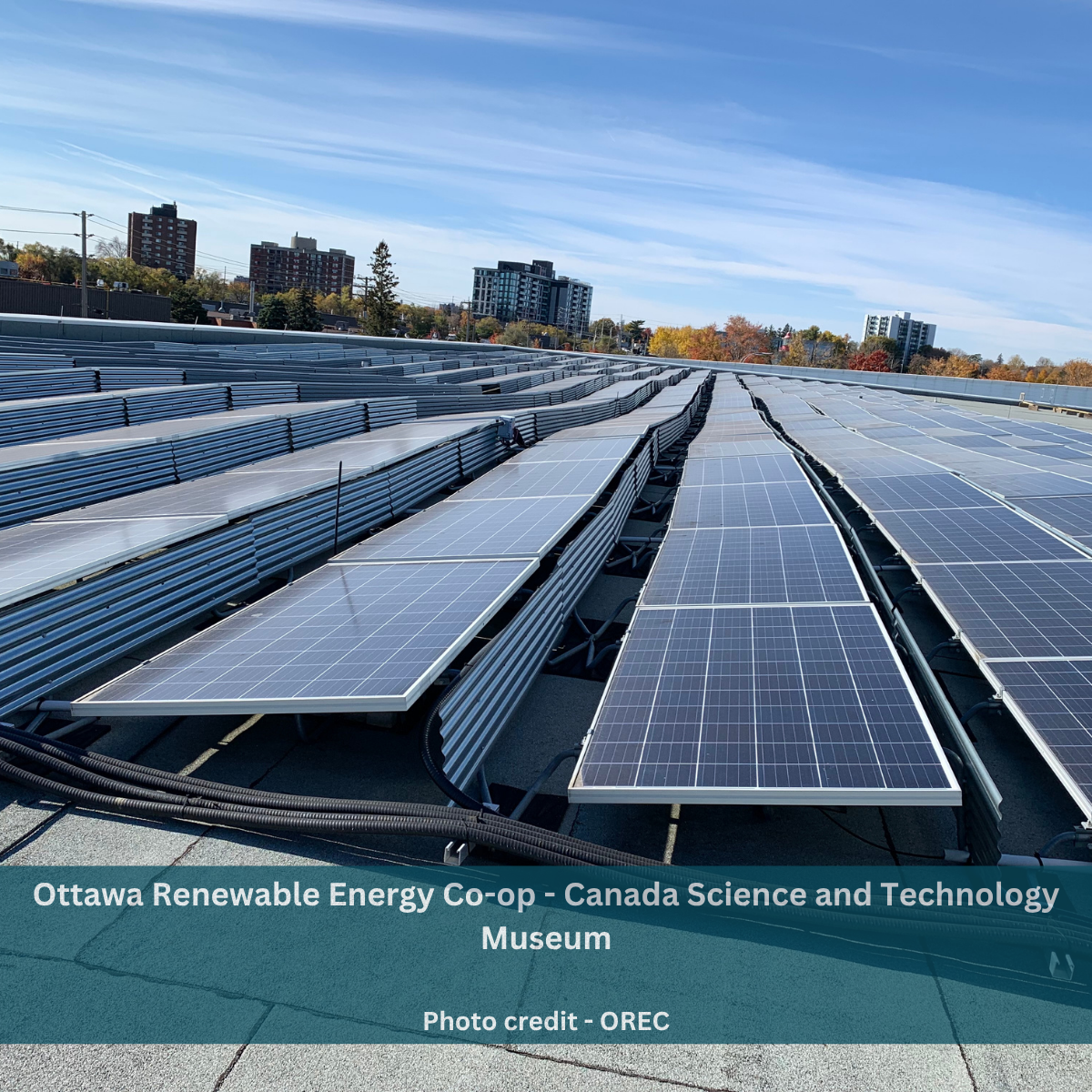
Examples from across Canada demonstrate what this can look like in practice. Projects such as Peace Energy’s co-ownership in a commercial wind park and Ottawa Renewable Energy Co-operative’s rooftop solar initiatives show how community participation can attract local investment, increase acceptance, and create ongoing benefits for residents and businesses.
Internationally, organizations such as REScoop.eu, along with community energy initiatives in Scotland and Wales, demonstrate what is possible when governments create the right conditions for community ownership to grow. In these jurisdictions, intentional policy support has helped make community energy a mainstream part of the energy landscape.
Recommendations to Support Community Energy Across Canada
In its submission, CECC outlines several ways the federal government can strengthen the role of community ownership in Canada’s energy transition:
Recognize community-owned energy models in federal programs
Community energy co-operatives should be explicitly identified as eligible participants in federal consultations, funding programs, and pilot initiatives related to energy, infrastructure, and economic development.
Support community-led grid innovation
Federal investments should prioritize community-owned distributed energy resources, including renewable generation, energy storage, demand flexibility, and emerging approaches such as virtual power plants.
Create pathways for local investment and benefit-sharing
Canada needs practical, ready-to-use models that help communities, municipalities, and regional organizations participate in energy infrastructure projects and share in their benefits.
Ensure communities benefit from AI and data centre development
As Canada expands artificial intelligence infrastructure and data centres, CECC recommends that local ownership opportunities, clean energy integration, and community benefit-sharing be considered alongside economic growth. This includes addressing potential impacts related to energy demand and water use for cooling.
Establish dedicated financing for community energy projects
CECC recommends creating a community energy window within the Canada Strong Fund to provide early-stage risk capital and enable Canadians to invest in both national infrastructure priorities and locally owned energy projects.
A Moment of Opportunity
Canada is at a pivotal point in shaping its energy future. The decisions made today will influence not only how energy is generated and delivered, but also who participates in,and benefits from, the transition.
Community ownership provides a pathway toward a cleaner, more reliable, and more inclusive energy system. It allows Canadians to move from being passive consumers of energy to active participants and owners in the infrastructure that powers their communities.
CECC is committed to working with federal leaders, policymakers, communities, and partners across the country to help advance solutions that strengthen Canada’s energy resilience while ensuring the benefits of the transition are widely shared.
We welcome the opportunity to continue this conversation and invite government representatives to join us at the upcoming 2026 Community Energy Forum in Montréal, where community leaders, co-operatives, policymakers, and energy experts will come together to explore the future of community-owned energy in Canada.